Thursday, 15 March 2018

Nursing by association

Elizabeth Bayliss and Kareema McCarthy. Pictures: Marcus Rose

ALTHOUGH Elizabeth Bayliss and Kareema McCarthy work at the same hospital, Kettering General in the East Midlands, they have only recently become friends – not on the wards, but at university.

That’s because the pair, who a few months ago were both healthcare assistants in different parts of the hospital, are now part of the pilot scheme to create a new breed of healthcare professional – the nursing associate.

Posited as a role that sits between the healthcare assistant and the registered nurse, with its own level of knowledge and skills, it involves two years training, both on the job and at university. For 2,000 healthcare assistants, that means the immediate chance to develop their NHS careers. And for some, like Elizabeth and Kareema, it means their desire to become nurses could now become a reality.

I just thought ‘Wow, I have to go for it.’ I wanted to get on that track

Elizabeth, 37, had been a healthcare assistant with the NHS for 10 years, working on the surgical wards at Kettering. She had always sought training, improving her skills, and was on the verge of becoming a grade 3, which is as far as she could have progressed as a healthcare assistant. A year ago, it seemed that the mother of five’s ambition to be a nurse might never be fulfilled.

“My education didn’t allow for nurse training, and neither did my finances,” she says. “If I wanted to go on and do nursing, I would have had to leave employment and become a full-time student, which at my age, with a mortgage and children was just not a viable option.

“My idea was that when my youngest finished high school I would have a go, in my Fifties. But I did wonder if it would ever happen.

“Then, last December, my matron came to me for a word. She told me there was going to be an opportunity and she wanted to put me forward for it, because she thought I had the abilities, the skill and the experience to get on this course. It was like a dream.”

Kareema, 33, came to the NHS later than Elizabeth, having had a range of other jobs, including running her own photography studio. But like Elizabeth she had always harboured the desire to be a nurse. After working as a carer for a private company, she joined Kettering in July 2016 as a healthcare assistant in A&E. When she heard of the trainee nursing associate (TNA) pilot, she jumped at it.

“I knew I wouldn’t be able to go to university straight away to do nurse training,” she says. “There was no chance. I’ve got two kids. We need income. It would have been impossible. So, I was going to work as a healthcare assistant and see what happened. Then this came along. I just thought ‘Wow, I have to go for it.’ I wanted to get on that track.”

The pilot scheme

The nursing associate is a new support role introduced by Health Education England. Two thousand people are currently engaged in the pilot scheme, across 11 test sites in England, which represent partnerships between universities, NHS trusts, GP practices and other health employers. Kettering Hospital and Northampton University – where Elizabeth and Kareema are studying ­– fall into the Midlands & East pilot site.

Their programmes provide trainees with a combination of taught education and on-the-job learning, leading to a foundation degree. In the hospital, each TNA will perform his or her old tasks as healthcares, but is assigned a nurse mentor on their ward, and other mentors as they learn about the work of other wards and outside the hospital, such as in GP surgeries and nursing homes.

From the outset, UNISON stated its concern that the introduction of the role might distract attention from the severe nursing crisis affecting the NHS – and that employers could treat nursing associates as merely a cheap alternative to registered nurses.

At the same time, the union saw that the new training could provide welcome career development for existing healthcare assistants and a stepping stone, for those who wished it, towards becoming a qualified nurse. To that end it played an active role in discussions about the pilot schemes and secured agreement on a nationally consistent pay rate for the TNAs.

And judging by the experiences of UNISON members Elizabeth and Kareema, the union’s work has been justified.
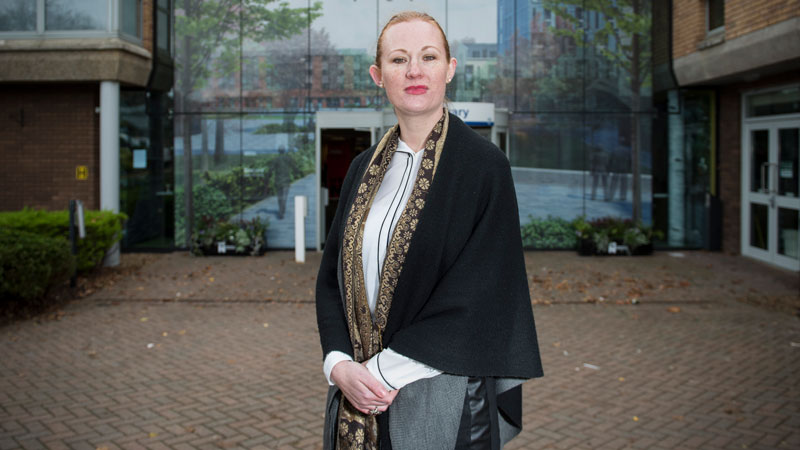
“I look at it as a puzzle,” says Elizabeth. “As a healthcare assistant you’re aware of your little piece, and you do it, but you don’t really see the rest of the puzzle and you don’t really see where you fit in. But as a nursing associate I have to know what the whole puzzle looks like, in the same way as a nurse or a doctor.

“As a healthcare assistant I get told to take someone’s blood pressure, to take their vital signs, I write it all down, I tell the nurse and my job’s done. As a nursing associate I will know what operations the patient has had, I’ll know the risks that were involved in that operation, I’ll know his medical history, I will know how his medications will affect him.

“So when I look at the vital signs I will understand that if the temperature is quite high, but the blood pressure’s fine, it could be this, it could be that. And I’m going to make decisions about what to do – I might decide to take his bloods, I might get a urine sample.

“But it’s not up to me as a nursing associate to change his care pathway. That’s still down to the nurse.”

Adds Kareema: “Nursing associates are going to be accountable for our actions. We are going to be registered, like nurses. So that’s a big step.”

The bigger picture

When asked what they’ve learned so far that has been most satisfying, Kareema answers “A&P” and then the pair of them – laughing in chorus – “anatomy and physiology”.

Kareema talks about her greater understanding of medications, and Elizabeth the bewildering array of abbreviations and terms – ‘comorbidities’ being her favourite. But she also notes her new awareness of “how easily a mistake can be made, on any level of care”, which of course heightens the need to stay sharp.

The experience, so far, has clearly transformed them. Kareema states her confidence now in challenging senior colleagues – even doctors – if she feels they’re in error. Says Elizabeth: “It’s changed the way I deal with my patients. I’m very conscious of looking at the bigger picture, and rationalising why I’m doing something.”

The pair are getting a huge kick out of being university students, each the first in their families to do so. Elizabeth, who came to the UK from Zimbabwe as a teenager, with what she describes as a “limited” education, enthusiastically recalls that the first thing she did when she started was buy a jumper with Northampton University on it. “You happen to be an adult, with a family, but you’re living the same dream as you have when you’re 18, 19.”

Kareema is half Libyan and, after spending her early childhood in her father’s country, returned to England needing to learn English. If that wasn’t hard enough, she was dyslexic, which dented her confidence for years; ironically, it’s only since she’s been at university, with the validation that brings, that she feels confident to talk about it. “People here have told me that dyslexic people are amongst the smartest they know,” she reports proudly.

The 38 TNAs at Northampton were selected from 200 applicants. They understandably tend to be older than student nurses, most have children and come from diverse ethnic backgrounds. A number are men.

Of course, juggling work on the wards, learning on the job, a day a week of university lectures and raising young families is no walk in the park.

“It’s exciting, because I know that each new day I will be learning new things. But at the same time it can be overwhelming,” says Kareema. “Our shifts are 13 hours, and then you’ve got your kids at home, you’ve got to do your assignments, essays…. But it makes you strong. I feel I could accomplish anything now.”

Elizabeth, who says that working as a healthcare assistant with five children involved “a military operation”, smiles ruefully at the thought of her current regime. “Occasionally, when you’re awake at three o’clock in the morning thinking about the assignment that’s due in two days, and you know your alarm is going off at 6.30 to start your shift… Well!

“When we come in on a Monday morning all the other students have been on a party night and they’re not tired for quite the same reasons as we are.”

Navigating the pitfalls

UNISON has been helping them navigate the pitfalls that are almost inherent in a pilot scheme, let alone one that is as charged as this in the workplace.

First, there was the old chestnut of pay.

The understanding from Health Education England is that healthcare assistants, most of whom are band 2, would all move up to band 3 during their training, and upon completion go into band 4. But the Kettering TNAs were being paid partly on band 2, partly band 3 – so were losing out.

It was when talking to students from other parts of the country, at a TNA conference in August, that they realised the discrepancy – and went straight to UNISON branch secretary Ian Kelly for help.

“Ian went away to clarify the situation, then came back and said yes, we were supposed to be on one band 3 contract. And he started negotiating straight away to fix it,” Elizabeth recalls.

Adds Kareema: “Because it was a pilot scheme, I don’t think the trust was sure what was what. Ian organised a meeting with the management, HR and Health Education England. Then in September we were told, ‘You’re TNAs, full-time, band 3.’ He did a really good job.”

Mindful of criticism by TNAs of some of their placements, because mentors were unclear what the new role meant, Ian Kelly also set out to better inform staff across the trust’s workplaces. Kareema and Elizabeth are doing the same with hospital colleagues, and have spoken about their training to senior matrons.

We’re not a cheap nurse, we really are here to support them

The TNAs are particularly concerned that none of their colleagues, whether healthcare assistants or nurses, feel threatened by their endeavours.

“I think that a lot of nurses think we’re replacing them, because of some stupid, damaging [media] articles,” says Elizabeth. “But we’re not replacing them in the least. Most of us have worked with our nurses for years and years, and we see how hard their job is. We see them get to the end of their shift, they’re supposed to go home, but can’t because they’re doing paperwork. There have been many times when I’ve gone home wishing that I could have done more for them.

“It’s a fear that I think they will overcome, when they see us in play, and see us working alongside them, and see that we’re not a cheap nurse, we really are here to support them.”

Just halfway through their training, and with the progression route from nursing associate to nurse still to be established, it’s early days to be thinking about next steps.

That said, Kareema is as clear as she’s always been. “I feel that I want to be a registered nurse, because that’s one of my goals. But I think it’s important to be a nursing associate for a year or so, to develop more skills and more experience, to get myself grounded.”

Elizabeth says that only around a quarter of TNAs she knows personally want to progress further. “Many want to be nursing associates, they feel they can give the most in that role. They wanted to develop and progress their careers, but to that level.

“I might decide to remain a nursing associate too, because it’s a valuable role. I don’t know. But at least for the first time I’ve got the opportunity to actually see, for myself.”

  • The Wales and Scotland governments do not intend to introduce the nursing associate role. Northern Ireland is still awaiting a new administration.

The article Nursing by association first appeared on the UNISON National site.


from RSSMix.com Mix ID 8239598 https://www.unison.org.uk/news/article/2018/03/nursing-by-association/
via IFTTT

source https://childrensplayareadesigns.tumblr.com/post/171901824887

Tuesday, 13 March 2018

Spring Statement leaves public services in a dark place, says UNISON

Commenting on the Spring Statement UNISON general secretary Dave Prentis said: “The Chancellor might have promised a brighter tomorrow, but the country’s beleaguered public services remain in a dark place today.

“He paints a picture a world away from the everyday experiences of ordinary families, and our cash-strapped NHS, schools and community services.

“The one ray of hope for public services was the heavy hint that the Treasury will fund an NHS pay rise, should employers and health unions be able to reach agreement.”

Media contacts:
Liz Chinchen T: 0207 121 5463 M: 07778 158175 E: l.chinchen@unison.co.uk
Clare Santry T: 0207 121 5546 M: 07944 191479 E: c.santry@unison.co.uk

The article Spring Statement leaves public services in a dark place, says UNISON first appeared on the UNISON National site.


from RSSMix.com Mix ID 8239598 https://www.unison.org.uk/news/press-release/2018/03/spring-statement-leaves-public-services-dark-place-says-unison/
via IFTTT

source https://childrensplayareadesigns.tumblr.com/post/171834992162

Monday, 12 March 2018

Every Child Matters

Left to right: Mike Gunnery, Joy Dunbavin, Paula Duffy and Glyn Slack. Photo: Dave Thompson

Missed appointments, bad teeth and visible hunger are some of the signs a child is being neglected. When this happens, social services steps in and a whole range of professionals work hard to get the  child’s life – and that of their family’s ­– back on track. That process will often involve fostering, and finding the right person to look after a child in their most vulnerable hour is no easy task.

At the last count, there were 51,805 children in foster placements in England. Every one of those children needs an approved, trained and compassionate foster carer to support them. So, on any given day, teams of local government staff are working hard to make sure they have enough foster carers to look after the children in their area.

Paula Duffy is the recruitment and engagement officer for fostering at Manchester City Council. Her job is to reach those people who would make good foster carers, which she does through events with local communities, at libraries and other venues.

One of the things Paula does regularly is challenge assumptions people have about fostering. “There is a mystery that surrounds fostering a bit,” she says. “People think they have to be in a relationship, or they have to own their own home, or they can’t be gay, or they have to be a certain age.” Paula’s job is to reassure people that these things aren’t the case. There is a minimum age, of course (it’s 21), but Paula’s oldest foster carer is 70 years old.

Fighting stereotypes

So, what makes a good foster carer? “There’s no average one. When you get them all in a room they’re all different colours, different ages,” Paula says.

There are certain professions that seem to unite them, though. “Nurses, midwives, doctors, teachers, teaching assistants, people who have got that kind of social conscious and want to make a difference.” They’re often people who have a kind heart, but don’t think of themselves as anything special, she says.

Sadly, it isn’t just stereotypes about who can foster that Paula comes up against. It’s also stereotypes about children. The ones they find hardest to place are boys over 10, because people have preconceived ideas about how they will behave.

Paula says it’s understandable, but actually, “We find that a lot of our young people are very quiet. They’ve learned not to make a noise, because something could happen. Sometimes they can be quite withdrawn.”

Paula explains that fostering is not a one-size-fits-all type of job. “Before I did this I didn’t realise the breadth of it.” There are short-term fosterers and long-term. Short term can be anything from a weekend to two years, and during those two years the plan may be for the child to return home, or it may be that they’ll then move to a permanent foster carer.

Short-term foster carers may do one weekend a month, and look after a child with a life-limiting illness. Or they might be emergency foster carers, who look after a child on a Saturday night because they’ve run away, before social workers find a placement for them on the Monday.

Permanent fosterers tend to take care of children who are eight or older, who are ‘too old for adoption’. “That’s not how we see it,” says Paula, “but people tend to want to adopt younger children.” With permanent fostering, the aim is for the child to stay until they’re 18.

The joy comes from placing children and seeing it work. It’s about providing a service for children

Then there is supported lodging, for children who have probably been in permanent foster care, get to around 16 or 17 and want to spread their wings, but are not yet very independent, so they go to live with a supported lodgings carer. They have an auntie or uncle kind of role, Paula says, “passing on all your life skills, cooking, things like that”.

So, once Paula has done her job and piqued a potential foster carer’s interest, some of her colleagues step in. The team at Manchester then has to talk to them about the job, make sure they understand what it means and that they’re going to make good carers.

Glyn Slack has been a social worker for 17 years. When someone is interested in being a fosterer, Glyn is one of the people making sure they receive the right information and that they’re asked the right questions. He will then visit them in their home. “It’s about making sure they’ve got things in place, and a life that’s good for the child.”

Next, if they seem a good fit, they’ll be brought on a ‘skills for fostering’ course, which they do with other adults interested in being fosterers. “Lots of people come to us with an idea of what fostering is, but not in much detail,” Glyn says. “I try and fill them in when I go to their house, but they really learn about it when they’re with other people and asking different questions. It’s really nice because people can bounce off each other, figuring out what the task is, and learning about what our children have been through.”

The last resort

Glyn’s colleague Mike Gunnery also works hard to get to know potential foster carers. “You talk to people about their skills and knowledge, you get to know people very well. You’re talking about very, very personal things, so you do form quite close relationships with them.”

Once the potential carers have gone through training, the final stage is being approved by a panel, and then they are eligible to have children placed with them. For Mike, “the joy comes from placing children and seeing it work. It’s about providing a service for children.”

Overseeing this whole process, and the fostering team, is Joy Dunbavin.

Joy started out in social work at 22 years old, and has now been doing it for 30 years. As the team leader, she offers a broader perspective on social work today: “You need to be thick-skinned to be a social worker,” she says.

For Joy, “it isn’t that parents don’t always love children, but they’re not giving them the care that a child needs. I’ve got a view that people often want to be the best they can and be the best parents, but sometimes a violent partner, a lack of money, mental ill-health or drug or alcohol dependencies stop them parenting the way they need to. It doesn’t mean that they don’t love the children.”

Joy stresses that removing a child from the family home is always the last resort. Nevertheless, their role means they’re not thanked in the same way teachers or NHS staff are. Does it get to them? “If you are making decisions where you may have to remove a child from a family, then you are not going to be very popular. That is inevitable,” Joy says.

She makes sure her team acknowledges every success, because, ultimately, “You’ve just got to focus on the child.”

Stand up for social work


The article Every Child Matters first appeared on the UNISON National site.


from RSSMix.com Mix ID 8239598 https://www.unison.org.uk/news/magazine/2018/03/every-child-matters/
via IFTTT

source https://childrensplayareadesigns.tumblr.com/post/171793637447

Friday, 9 March 2018

How to… get marching

Images: Marcus Rose

Demonstrations and marches have always been effective ways to send a message to politicians and the public about issues that matter to our union and its members, and the people and communities they serve.

For those watching from the pavements a big demonstration – 500,000 people marching against austerity for instance – is a massive, colourful family-friendly and noisy event.

For those taking part, a march is inspiring, a way to make your voice heard and to show solidarity with other trade union members. It’s also fun.

So, whatever the issue and whether it’s local or national, why not get your branch involved and marching?

Planning for a demonstration

If you decide to organise a branch presence on a demonstration, it’s worth finding out as much as possible before you start speaking to branch members.

The UNISON website is a good place to start, as we publicise marches we are supporting in the ‘events’ section at www.unison.org.uk/events.

If we are supporting a demonstration held by another organisation, we will provide a link to their website so you can get the information you need.

Also keep an eye on our publications like activist – both digital and in print – as well as branch circulars from your service group.

We will also use social media to advertise marches, so keep checking on Facebook, Twitter etc… Make a note of the hashtag we are using for the event, so you can see what other people are doing.

The next step is to think about the questions members might ask when they are deciding if they want to be involved. A key issue is how members will get to the march. Do they need to make their own way, or will the branch co-ordinate transport?

If you think branch members will be keen to attend in numbers, you might want to investigate organising buses yourself.

But first check with the organisers to see if they have transport planned that your members can use. Or speak to your region, as often regional TUC or UNISON transport has been organised. But do it early: buses get full and parking spots get booked up.

If you are organising your own buses, check what arrangements have been made for parking at your destination and how long it will take you to get from parking areas to the assembly point for the march.

Coaches are often not able to park next to the assembly point, which can mean a bit of travelling to do. Make sure that is clear for members who may have mobility issues and check with the organisers about what arrangements have been made for disabled access on the day.

You may want to encourage branch members to travel together on trains, so it’s worth checking the timetables and advising members what train other people are getting so they can travel together.

Be prepared

However people get there, they will need to know what time to assemble, where to meet and when a march or rally is likely to finish.

It will also be helpful for them to know how far they will be walking.

Remind them to wear comfortable shoes and prepare for all weathers – it sounds obvious, but you’d be surprised how many people don’t think about that, especially if it’s their first time. Sunburn or blisters are no fun, however important the issue.

You should also remind them to bring food and water, as it can be a long day.

UNISON produces publicity material that you can use locally to encourage participation. You can order them in bulk from the online catalogue at unison.org.uk/onlinecatalogue.

Often, they can also be downloaded from the website and emailed to members, or printed out and put on noticeboards. These are for use before the event, so don’t bring them with you on the day. You won’t need them.

On the day

We like to encourage UNISON branches to march together, so we can be loud and visible together. Also, it’s great if people can wear purple and green so we stand out as UNISON.

For summer marches you can order UNISON t-shirts from our online catalogue. If it’s too cold for t-shirts, then you can order purple tabards – also from the online catalogue – which can be worn over warmer clothing. You will need to pay for t-shirts and tabards.

Look for the giant UNISON balloons or UNISON flags and head in their direction – as that is where UNISON members will be.

That will also be where you can pick up UNISON placards, whistles and other things to help you get noticed. You can order some of our blank placards in advance and encourage members to write their own slogans or messages on them.

After the event, check with the stewards where you should leave placards and other things you are not taking back with you.

Bring your branch banner and organise members to carry it in relays, plan some songs and chants, and ask someone to volunteer to take pictures and post them on social media.

They should do this from the minute you leave home to the end of the march – and don’t forget to use the hashtag. That’s a great way for branch members who couldn’t attend to keep up with everything that is happening.

There will be plenty of stewards around on the day who are there to help with any questions or issues you may have.

And finally, enjoy the day. Be inspired – inspire your members and help us make a difference.

How to get the most out of your campaigning photos

TUC national demonstration: a new deal for working people

The article How to… get marching first appeared on the UNISON National site.


from RSSMix.com Mix ID 8239598 https://www.unison.org.uk/news/article/2018/03/how-to-get-marching/
via IFTTT

source https://childrensplayareadesigns.tumblr.com/post/171696161922

Thursday, 8 March 2018

UNISON reacts to latest A&E figures

Commenting on the latest statistics for A&E attendances and admissions for February, UNISON assistant general secretary Christina McAnea said:

“The latest data shows just how punishing the winter months are proving for the NHS. Last month was the worst on record. Yet the figures don’t include the added difficulties staff faced when freezing conditions began to hit the UK last week.

“Day in day out, staff go to great lengths to ensure patients are cared for as fast as possible, no matter how cold, wet or snowing it is outside. Without more funding the NHS will go on struggling to meet demand and keep the service safe.

“Seeing sick and injured people having to wait for hours on end to be treated in hospital corridors is not what health professionals signed up for when they joined the NHS.”

Media contacts:
Fatima Ayad T:0207 121 5255 M:07508 080383 E: F.ayad@unison.co.uk
Liz Chinchen T: 0207 121 5463 M: 07778 158175 E: l.chinchen@unison.co.uk

The article UNISON reacts to latest A&E figures first appeared on the UNISON National site.


from RSSMix.com Mix ID 8239598 https://www.unison.org.uk/news/press-release/2018/03/unison-reacts-latest-ae-figures/
via IFTTT

source https://childrensplayareadesigns.tumblr.com/post/171666069882

Blog: Child Marriage is Child Labour

Today – March 8th – marks International Women’s Day. For UNISON, with a million women in membership, this is obviously a significant date. UNISON women are at the heart of everything our union does – leading our campaigns, deciding our policies and keeping our union and public services strong.

This is a day to celebrate the achievements of women, including those we’re proud to know. But it’s also a day to remember the battles won by women and the struggles still faced by women around the world.

One of the most grievous examples of mistreatment of women worldwide is child marriage.

Earlier this week the United Nations Children’s Fund (UNICEF) reported that child marriage has decreased by 15 per cent over the last decade. Whilst this is welcome news, it is staggering that 21 per cent of girls across the world are still subjected to this horrendous form of abuse.

Child marriage is one of the worst forms of child labour and a terrible violation of a girl’s human rights. Girls are often trafficked or sold, sexually abused, denied the right to an education and forced to perform hazardous, unpaid work for long hours.

When world leaders gathered at the United Nations in September 2015 to approve the Sustainable Development Goals, they promised to end child marriage by 2030. Until now global efforts have mainly focused on education, investment in adolescent girls and positive public messaging.

All of these are important, but on their own will not end child marriage.

In recent years the International Labour Organisation (ILO) has led global efforts to end child labour, but have completely ignored the labour performed by the millions of girls in illegal child marriages. If these girls were protected by the ILO’s legally binding international convention on the Worst Forms of Child Labour, governments would be forced to act and the ILO could invest its resources to end this terrible crime.

Sadly the ILO doesn’t classify the hazardous work performed by a child bride as child labour, ignoring the plight of the millions of girls.

I was immensely proud last June when UNISON’s National Delegate Conference voted unanimously to support the campaign to end child marriage. Many delegates bravely and passionately described the horrendous impact that child marriage has had on them and their families. Our union is now working with AIDS-Free World and an increasing number of unions across the world on this vital campaign.

Today I wrote to Guy Ryder, Director-General of the United Nations International Labour Organisation (ILO) and the UK government, to urge them to support the campaign. You can find a copy of the letter here.

This International Women’s Day it is important that we stand up for equality in every workplace; for decent work and freedom from violence and harassment for women everywhere.

Child marriage is child labour and together we can end it.

Read more about our “Child Marriage is Child Labour” campaign here.

The article Blog: Child Marriage is Child Labour first appeared on the UNISON National site.


from RSSMix.com Mix ID 8239598 https://www.unison.org.uk/news/2018/03/blog-child-marriage-child-labour/
via IFTTT

source https://childrensplayareadesigns.tumblr.com/post/171662883362

Underfunding of schools resulting in increased class sizes for secondary schools in England

New research by the School Cuts coalition of unions (NEU, NAHT, ASCL, UNISON, GMB and Unite) shows that class sizes are rising in the majority of secondary schools in England as a result of the Government’s underfunding of  education.

There is a particular problem in secondary schools because of a shortfall of £500m a year to funding for 11 – 16 year olds, between 2015/16 and 2019/20, plus the deep cuts to sixth form funding (over 17% per pupil since 2010).

62% of secondary schools in England have increased the size of their classes in the last two years (2014/15 to 2016/17). In some authorities this has had a dramatic effect. In York, secondary schools have an average of three more students in every class.

It is also striking that the five areas with the largest secondary school classes have all seen an increase in the last two years – Barnsley, Rutland, Thurrock, Newham and Leicester. This shows the Government is failing in its stated aim to even out the differences in education.

Geoff Barton, General Secretary of the Association of School and College Leaders, said: “We have repeatedly warned that schools have had to increase class sizes because of funding pressures and here is yet more evidence that this is the case. It is the last thing they want to do but they have no other choice because they have to reduce staffing numbers and that inevitably affects the teacher-to-pupil ratio. Larger classes mean less individual support for students, and put more pressure on teachers at a time when we desperately need to reduce workload.”

Karen Leonard, GMB National Officer, said: “As class sizes increase and targeted professional support by teaching assistants and other support staff is cut, once again it is the pupils who lose out. If we don’t stop these cuts, we run the risk of lessons reverting to a Victorian ‘one size fits all model where any child with additional needs, gifts or talents or just needing a bit of extra support simply won’t get it. Talent will be wasted, additional needs will not meet and a generation of children will not have the opportunity and support to reach their potential.”

Paul Whiteman, General Secretary of school leaders’ union NAHT, said: “The government’s own figures show that an extra 654,000 school places will be needed in England by 2026, to meet the nine per cent rise in pupil population. 91 per cent of schools face real-terms budget cuts compared to 2015/16 at a time when costs are rising and pupil numbers are growing. Not only that but the cuts to front-line classroom posts combined with a rise in pupil-to-classroom teacher ratios, mean bigger classes and less individual attention for children.”

Kevin Courtney, Joint General Secretary of the National Education Union, said: “Time and again we are hearing about the consequences of the Government’s inadequate funding of our schools and 6th form colleges. Larger class sizes means less individual attention for children. Our children and young people deserve an education that is properly funded and resourced. For many it is their only chance of an education and it cannot be ruined by Ministers who believe starving schools of cash is either acceptable or workable.”

Jon Richards, UNISON head of education, said: “It’s a sorry situation when rising class sizes are happening in sync with cuts to school support staff. Fewer support staff means more work for already hard-pressed teachers. Over the past five years, secondary schools have seen a 10% cut in school technicians and an 8% cut in teaching assistants.  This is a double whammy for vulnerable and disadvantaged pupils, who can face greater challenges in larger classes and for whom support staff are a lifeline.”

Gail Cartmail, Assistant General Secretary at Unite, said: “The education and wellbeing of future generations is being harmed by cuts to school budgets. Schools across the country are being forced to cut staff, leading to less educational support for children and bigger class sizes. The Government should be investing in our schools to give young people the best start in life and the best chance possible to fulfil their potential.”

Editor’s note:
All the data is available at http://bit.ly/school_cuts_data

The data is drawn from Schools, pupils and their characteristics: January 2015 and Schools, pupils and their characteristics: January 2017.

Contacts
ASCL: Richard Bettsworth 07885 467344/ 0116 299 1122 Richard.Bettsworth@ascl.org.uk

GMB: 07958 156846 press.office@gmb.org.uk

NAHT: Steven George, Head of Press & Media – 01444 472 483 / 07970907730; Email: pressoffice@naht.org.uk

NEU Press Office – direct lines 020 7782 1589 / 0207 380 4706, Out of hours: 07918 617466 / 07922 576 869

UNISON: Liz Chinchen – 0207 121 5463 / 07778 158175; Email: l.chinchen@unison.co.uk

UNITE: Alex Flynn – 0203 371 2066/ 07967 665 869; Email: alex.flynn@unitetheunion.org

The article Underfunding of schools resulting in increased class sizes for secondary schools in England first appeared on the UNISON National site.


from RSSMix.com Mix ID 8239598 https://www.unison.org.uk/news/2018/03/underfunding-schools-resulting-increased-class-sizes-secondary-schools-england/
via IFTTT

source https://childrensplayareadesigns.tumblr.com/post/171657301527

Children's Play Area Designs

Colourful playground markings have become really popular in numerous schools and nurseries as they create an attractive design with enjoyab...